Jamais Cascio
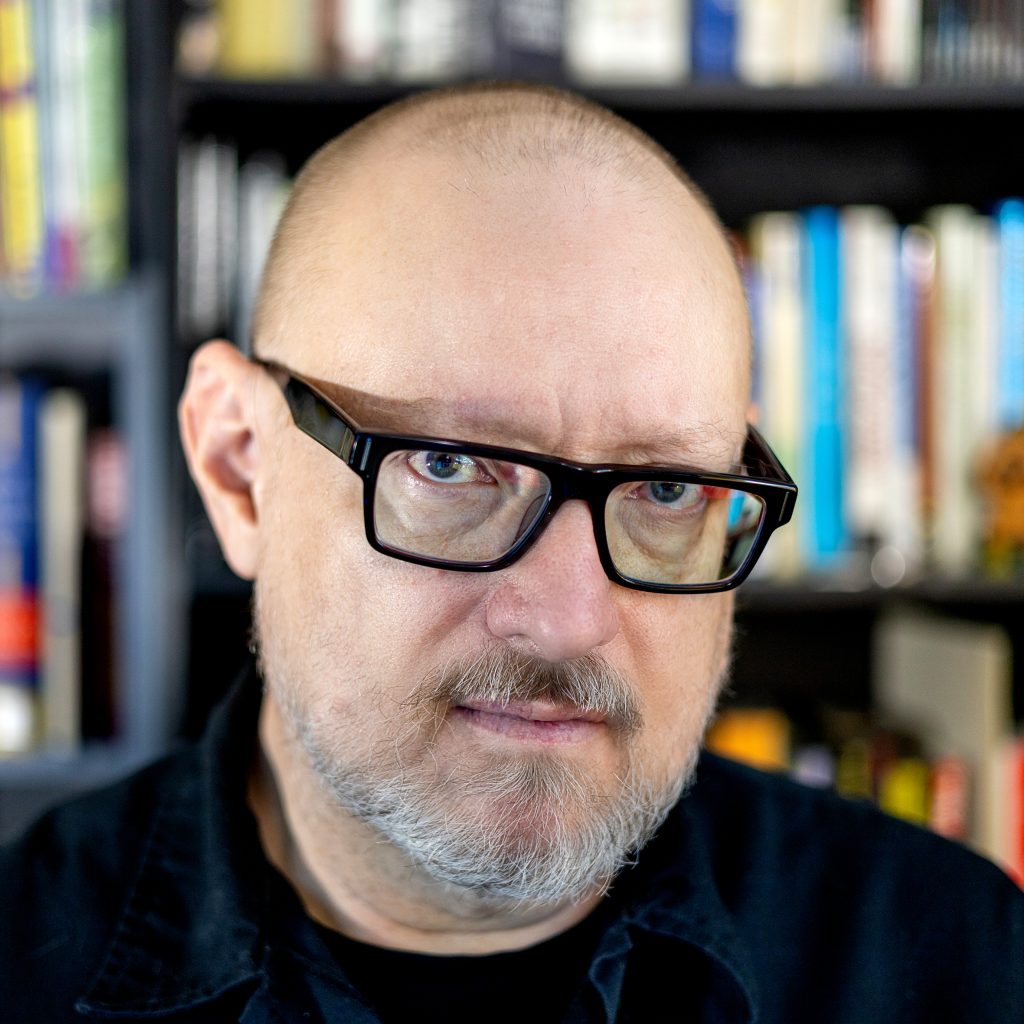
Jamais Cascio has worked as a futurist for over three decades, but he usually refers to himself as an “easily-distracted generalist.” He has given talks about deepfakes to the Arab Media Forum, the politics of geoengineering to the U.S. National Academies of Science, and the possibility of hope amidst global chaos for the World Bank. He’s written and spoken around the world about the ethics of cognitive enhancement, the carbon footprint of cheeseburgers, and the critical need to deal with climate change. He explored the disruptive potential of networked mobile cameras (i.e., mobile phones) in his work three years before the iPhone came out. A nuclear policy NGO twice sought him out to write scenarios of the future of global security.
He worked as a computer network administrator and as a (paper and dice) game designer. He spent a couple of years in Hollywood as an advisor for science fiction television shows. He was the lead writer for an award-winning blog back when there were blogs. He’s appeared in enough television and film documentaries to warrant his own IMDB page. Foreign Policy magazine listed him as one of their “Top 100 Global Thinkers” in 2009; the University of Advancing Technology awarded him an honorary doctorate of science (Sc.D.) in 2017.
He’s chatted with Al Gore about the animated series Futurama and with Michio Kaku about the possibility of “boiling space-time”. He was name-checked in an issue of the Avengers comic book. He’s actually touched a moon rock.
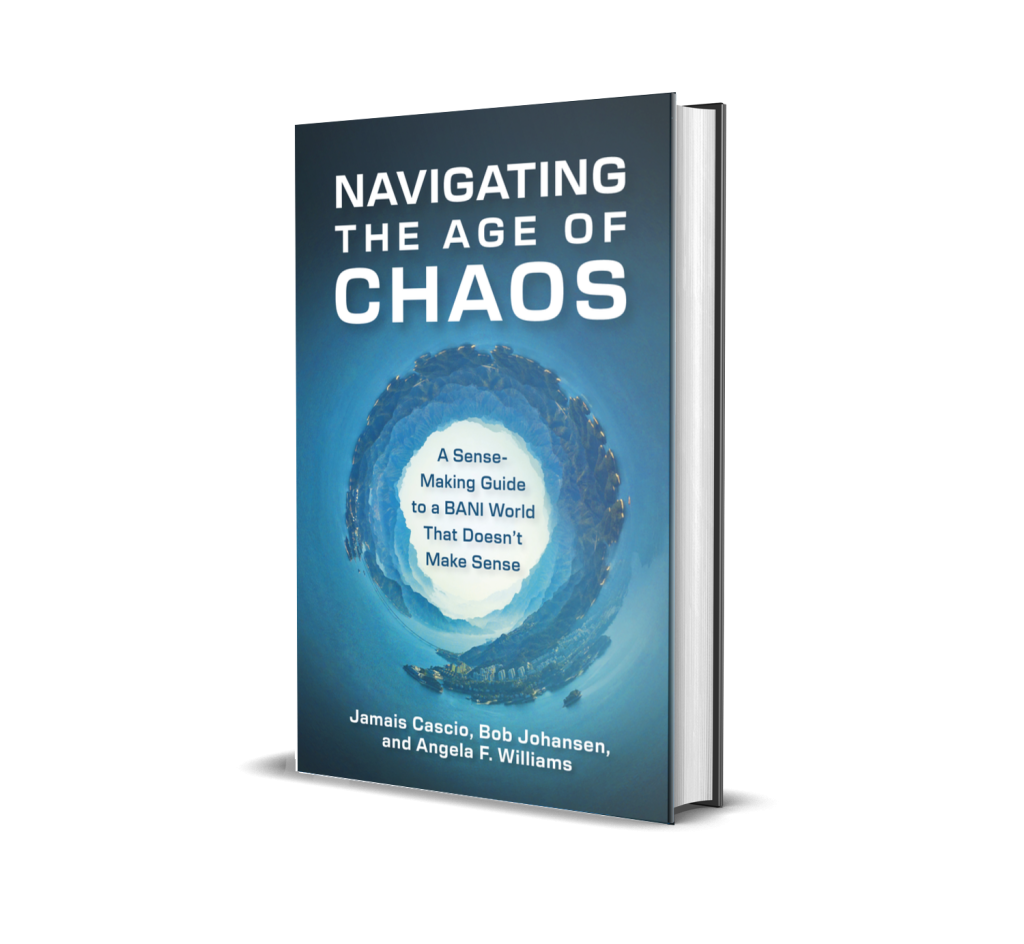
The Institute for the Future has had him in their network long enough to consider him a “Distinguished Fellow.” He created “BANI” as a way of talking about the future of trust and international power for an IFTF event. Apparently, being an easily-distracted generalist is the perfect training for working as a futurist.
He has a bachelor’s degree in anthropology (focusing on evolution) and history (focusing on revolutions). He did his graduate work in international politics, although he wrote his master’s thesis on consociational democracy in Lebanon. He never got around to finishing his actual Ph.D.
Amidst all of this, he’s had one constant: his wife since 1992, Janice Cripe, and their cats.